


AI innovation from Creighton resident, faculty game changer in medical education
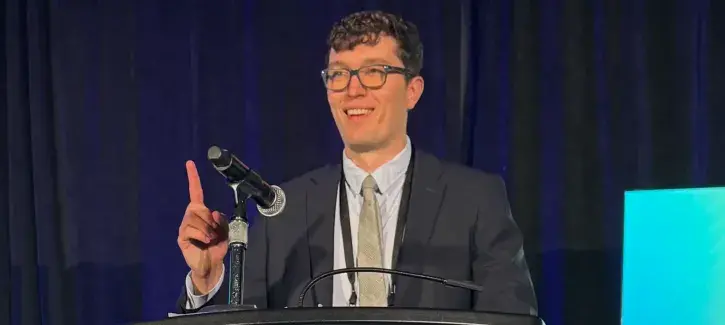
Plato was right: necessity is the mother of invention.
At Creighton University School of Medicine in Phoenix, necessity often becomes inspiration, especially when it comes to preparing the next generation of physicians to serve with skill and compassion.
Connor Yost, MD, a resident with the internal medicine residency program in Phoenix, experienced firsthand the challenges medical students face when transitioning into residency—demanding hours, steep learning curves and the need to communicate clearly under pressure. It was an opportunity to innovate.
With support from his faculty advisor, Christine Firth, MD, Creighton’s internal medicine clerkship and sub-internship director, Yost created Nurse Althea, an artificial intelligence–powered chatbot that simulates the real-world communication demands of hospital life.
From idea to impact: Nurse Althea’s success
The platform replicates the fast-paced, high-pressure “cross-cover” experiences of new residents. It challenges users to respond to simulated hospital staff with varying personalities, levels of experience and medical concerns, and it requires quick, accurate and empathetic communication.
“Not everyone gets this practice in med school,” Yost says, and Nurse Althea gives students “real-life situations within their specialty that they’ll be working in.”
Technology rooted in mission
A beta version of the platform has already shown strong results. More than 116 medical students tested Nurse Althea, completing over 500 simulated cases in varying fields. Participants rated the experience 4.3 out of 5 and reported significant gains in confidence and communication skills. The tool’s ultimate goal is to reduce the anxiety many new residents face—an issue affecting more than 40% of first-year trainees—by providing realistic practice in decision-making and team communication before entering the clinical environment.
The core of Creighton’s approach to innovation is the University’s Jesuit mission: to improve the human condition through the advancement of knowledge and compassionate care. Nurse Althea is just one of many faculty-led initiatives that exemplify how the University is transforming medical education to meet the evolving needs of patients and providers alike.
Shaping the future of healthcare education
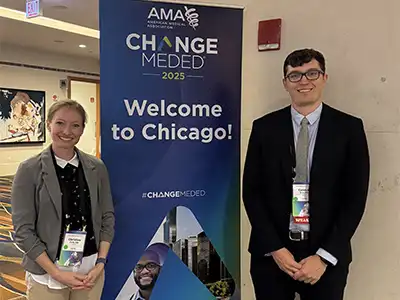
The American Medical Association (AMA) recently recognized Nurse Althea as one of three national winners of the 2025 ChangeMedEd Bright Ideas Competition, awarding the project $20,000 to expand its capabilities.
With the AMA funding, Yost and Firth plan to add more clinically detailed cases, specialty-specific scenarios and real-time performance feedback to better mirror the complexity of hospital life.
“I want to grow Nurse Althea into a free tool used by all medical students to improve their education in messaging-based communication and medical decision making,” says Yost.
As Creighton continues to expand its programs in Phoenix and beyond, initiatives like Nurse Althea demonstrate how the University’s faculty and residents are contributing to the future of healthcare by advancing technology that serves both students and patients alike.
Learn more about how Creighton University School of Medicine is impacting healthcare through innovation, education and mission-driven leadership.


