The changing face of pharmacy and the people leading it
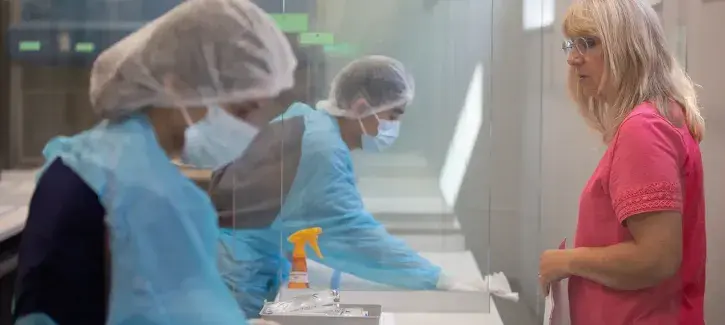
Pharmacists have always been trusted professionals, ensuring medications are safe, effective and tailored to each patient’s needs. But their responsibilities are growing far beyond what most people picture when they think of a pharmacist. Across the country, pharmacists are stepping to the forefront of preventive and population health, transforming how communities receive care.
At Creighton University, faculty and students are not just witnessing this evolution—they’re driving it.
A profession moving beyond the counter
Jenny Tilleman, PharmD, associate professor of pharmacy practice at Creighton, says that over the past decade pharmacists have become essential members of healthcare teams in nearly every setting.
“During the COVID pandemic, we saw pharmacists provide the majority of vaccines,” Tilleman says. “It really underscored how accessible pharmacists are and how vital their role is in public health.”
That accessibility is one of the profession’s defining strengths. Pharmacists can often see patients more quickly than a primary care provider, making them key partners in early intervention and disease prevention. They are increasingly involved in managing chronic conditions, advising on complex therapies and serving as a bridge between patients and physicians.

Shifting focus to patient care
For many in the profession, the most significant development has been the formal recognition of pharmacists’ cognitive services and the expertise they provide beyond simply dispensing medication.
“In the past, pharmacists were paid only for the product they dispensed,” says Molly Goessling, PharmD, BCGP, assistant professor of pharmacy practice and director of Creighton’s Center for Medication Therapy Management. “Now, medication therapy management allows pharmacists to receive compensation for the clinical services and problem-solving they offer. That shift allows us to focus on what matters most: the patient.”
Through this change, pharmacists are able to spend more time counseling individuals on medication use, monitoring outcomes, adjusting therapies and preventing complications. The result is more personal, preventive care, and better health for the communities they serve.
Expanding access and impact
As one of the most accessible healthcare professionals, pharmacists play a crucial role in reaching people who might otherwise go without care. During the pandemic, the test-to-treat model emerged as a new way to leverage their expertise. Under this approach, pharmacists can test patients for illnesses such as COVID-19, influenza or strep throat and, when appropriate, begin treatment under a collaborative agreement.
Goessling believes continued innovation in technology will further strengthen pharmacists’ ability to focus on patients. “Centralized fill and automation may one day handle many of the dispensing tasks,” she says. “That could open up even more time for pharmacists to be clinicians, educators and advocates.”
Preparing the next generation of pharmacy leaders
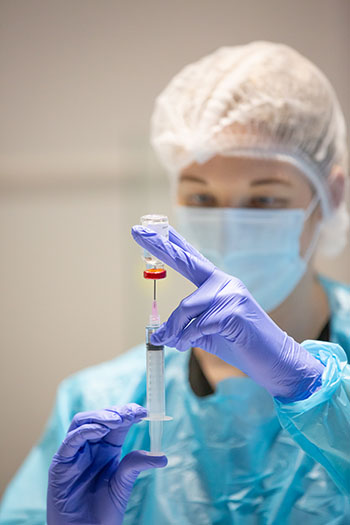
At Creighton, future pharmacists gain hands-on experience that mirrors this evolution in real-world practice. Through introductory and advanced practice experiences, they deliver immunizations, perform health screenings and counsel patients on healthy lifestyles. They also learn to collaborate across disciplines through Creighton’s Center for Interprofessional Practice, Education and Research, working alongside medical, nursing and allied health students to improve patient outcomes.
Community service is another hallmark of Creighton’s approach. Through initiatives like Shoo the Flu, the Magis Clinic and the St. Vincent de Paul Clinic, students put their learning into action while serving vulnerable populations, truly embodying Creighton’s mission of care for the whole person.
“Creighton creates a growth-mindset environment where students build confidence and independence,” Goessling says. “They graduate ready to lead in a profession that’s constantly changing.”
A future defined by innovation and compassion
Both faculty members agree that the next era of pharmacy will be defined by clinical expertise, expanded scope of practice and deeper patient relationships. As reimbursement models evolve and federal provider status becomes a reality, pharmacists will continue to move beyond the counter and into the center of patient care.
“We’re moving away from a product-based model and into one that values our clinical knowledge,” Tilleman says. “That’s where pharmacists can make the biggest impact.”
The profession’s transformation is already well underway and Creighton graduates are helping lead it.
Learn how Creighton is shaping the future of pharmacy
At Creighton University’s School of Pharmacy and Health Professions, students learn from expert faculty, gain early clinical experience and join a community that believes in serving others through healthcare. Here, future pharmacists become leaders who advance health, improve lives and transform communities.
Learn how you can start your journey in pharmacy at Creighton by exploring Creighton’s Doctor of Pharmacy program.