Creighton recognized as a national leader in first-gen student success
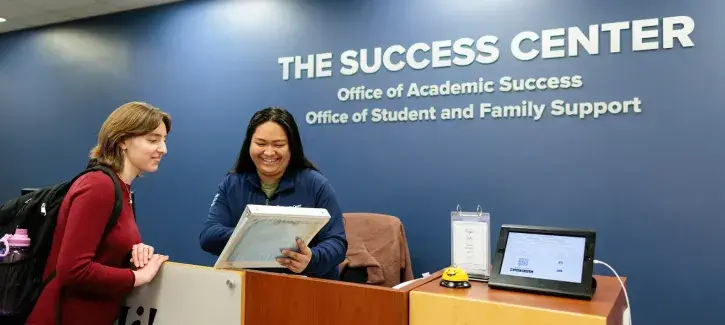
Creighton University has been recognized by FirstGen Forward as a FirstGen Forward Network Champion, an honor that places the University among a select group of institutions leading the nation in advancing success for first-generation college students.
With this designation, Creighton joins just 40 Network Champion institutions nationwide in 2026 and is the first Jesuit university to achieve this honor. This places Creighton as a national leader in developing, implementing and scaling evidence-based practices that support first-generation students and their families.

Creighton’s Success Center, TRIO programs and the First-Generation Steering Council have been key contributors to this work, helping shape a national knowledge base of leadership engagement and measurable student outcomes.
"This Champion designation positions Creighton as a national example of excellence in serving first-generation students and families,” says W. Wayne Young, Jr., BA’93, MS’25, PhD, vice provost for Student Success. “It affirms that our strategy—connecting each individual student to a broad community of faculty and staff who are deeply invested in their success—is working. We call this our ‘one-to-many' approach.”
Creighton’s Legacy of First-Generation Student Support
Creighton’s commitment to first-generation student success is not new, but rather, the result of more than four decades of intentional work.
With the founding of TRIO Student Support Services (SSS) in 1979, the University has continued to expand its support through initiatives such as Bluejay First, Creighton First and other programs designed to meet students’ academic, financial and personal needs.
Today, that foundation has evolved into a coordinated, campus-wide ecosystem of support that reflects a significant shift from isolated programs and events to a deeply integrated approach.
Inside Creighton’s Commitment to First-Generation Student Success
Dedicated staff across the university have first-generation support embedded into their roles, enabling early identification of student needs and proactive outreach and intervention. Guided by a strong alignment between mission, data and student success outcomes, this work focuses on closing equity gaps between first-generation and continuing-generation students.
The First-Flight program, launched as a pilot in spring 2026, provides first-year, first-generation students with a year-long experience centered on mentorship and community-building. First-generation students and families are also engaged through orientation, campus events and ongoing communications, and a resource hub that creates more accessible, centralized support.
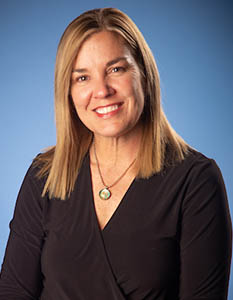
“This recognition shows what’s possible when an entire campus takes responsibility for student success,” says Mary Ann Tietjen, EdD, senior director of The Success Center. “It is a commitment that lives across our teams, our faculty and staff, our alumni, our donors, up to our most senior leadership.”
“Supporting students who are the first in their families to attend college is central to our Jesuit, Catholic mission,” Young adds.
First-Generation Student Impact at Creighton

First-generation students at Creighton are turning support into leadership and real-world experience.
For senior nursing student Vic Mbengwie, programs like TRIO SSS have been central to that journey. Through one-on-one coaching, mentorship and hands-on roles, including serving as an intern supporting new students, he’s gained both personal support and leadership skills.
“The coaches that I’ve had at TRIO have deeply impacted me,” Mbengwie says. “It’s the main reason being a first-gen at Creighton has been such a great experience.”
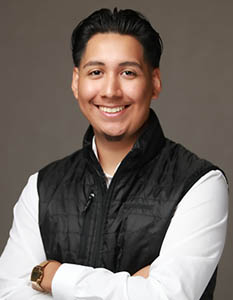
James Silva, a senior financial analysis and marketing student at the Heider College of Business, shares a similar path. Through mentorship, scholarships and consistent support, he’s built confidence, secured internships and grown as a leader.
“Coming to Creighton as a first-generation student has taught me persistence, strength through faith and how to grow,” Silva says. “I’ve had support every step of the way.”
For both students, Creighton’s investment covers academics and helps shape career outcomes, but it goes deeper, inspiring them to lift others as they’ve been supported along the way.
“I am inspired by our first-generation students,” Tietjen emphasizes. “They are leaders who live out what it means to be people for and with others. They lean into every opportunity in front of them. As a leader in this work, and as a first-gen student myself, I take the role seriously—to walk alongside them, remove barriers and make sure they know they belong at Creighton and that they matter."
The Future of First-Generation Student Support at Creighton
Since 2023, Creighton University has progressed through FirstGen Forward’s three-phase model—earning recognition as a Network Member, then Network Leader and now Network Champion.
But at Creighton, the work is far from finished.
As a Network Champion, Creighton will remain actively engaged in continuous improvement, aligning its efforts with strategic priorities to enhance the experience and outcomes of first-generation students.
“Creighton University has displayed a commitment to actively adopt the continuous improvement model and align their efforts with institutional priorities to guide first-generation students to completion,” said Dr. Martina A. Martin, vice president of FirstGen Forward.
With 54% of undergraduate students nationwide identifying as first-generation, the importance of this work continues to grow.
“Our approach is working,” says Tietjen. “We have built a connected ecosystem of support—and we’re not done. It challenges us to keep going, keep innovating and continue closing the equity gaps that matter most for our first-gen Bluejays.”