


Pharmacists expand career paths beyond dispensing medications
Advances in technology are rapidly reshaping the workforce, and our students are prepared to adapt to this ever-evolving work environment. Today’s pharmacists, for instance, are doing far more than filling prescriptions. It’s an exciting shift, and it’s opening new doors for students considering the profession.
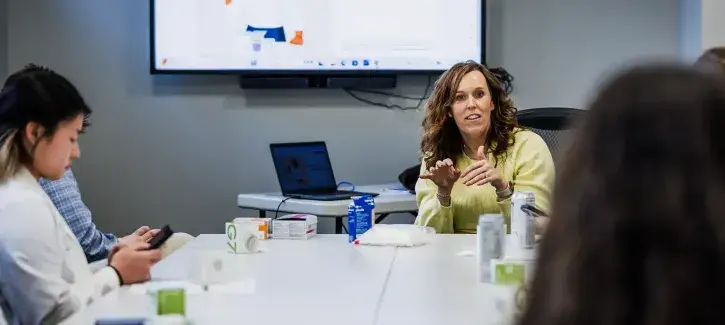
Across the country, pharmacists are taking on expanded clinical roles in hospitals and outpatient clinics as well as community settings. They work closely with physicians and care teams to manage chronic conditions, optimize medications and support long-term patient health.
“Pharmacists are increasingly functioning as physician extenders,” says Emily Knezevich, PharmD, BCPS, CDCES, FCCP, professor in the Creighton University School of Pharmacy and Health Professions. “They help manage chronic diseases such as diabetes, hypertension and hyperlipidemia and can adjust medications between physician visits.”
In ambulatory care settings, pharmacists often work under collaborative practice agreements, formal partnerships with physicians that allow them to monitor patient progress and modify treatment plans to help patients reach treatment goals more efficiently. This can be especially impactful for patients who may only see their primary provider every few months.
“Pharmacists are often more accessible within the clinic setting. Thus, they can collaboratively assess patient progress toward therapeutic goals and alter medication therapy to achieve them more efficiently,” Knezevich says.
That impact extends to hospital settings as well. “Pharmacists in acute care are now more commonly integrated into clinical teams, participating in rounds and helping adjust therapies,” says Ryan B. Dull, PharmD, BCPS, associate professor at Creighton.
This shift toward team-based healthcare highlights the growing demand for pharmacists with advanced clinical training and strong communication skills.
Preparing students for the future of pharmacy careers
Careers, including those in the healthcare sector, are evolving quickly. According to the World Economic Forum, nearly 39% of existing skills are expected to change dramatically or become outdated by 2030. Creighton’s strong liberal arts education, rooted in the Magis Core Curriculum, prepares pharmacy students with both scientific expertise and the adaptable skills needed for long-term success.
Our Doctor of Pharmacy program combines rigorous clinical training with a strong foundation in communication, ethics and critical thinking. These skills are essential for pharmacists working in collaborative, patient-centered environments.
“Important skills for pharmacists include utilizing a patient-centered approach, listening actively, displaying empathy and navigating communication barriers,” says Stacey Dull, PharmD, BCPS, associate professor of pharmacy and surgery. Dr. Stacey Dull teaches a first-year communication course in which students practice real-world scenarios, from counseling patients to working through difficult conversations with other healthcare providers.
“We incorporate group discussions, role playing and real-life examples,” she says. “Students continue to build these skills throughout the curriculum in labs and clinical experiences.”
Those experiences are designed to help students feel confident not just in their clinical knowledge, but in how they apply it as part of a healthcare team.
Hands-on learning that builds confidence and leadership
Experiential learning is central to the Creighton pharmacy experience. One signature opportunity is the Introductory Pharmacy Practice Experience IV, often referred to as an “APPE boot camp.”
“The goal is to ensure students are ready for advanced rotations and real-world practice,” says Maryann Skrabal, PharmD, CDCES, professor and vice chair of the Department of Pharmacy Practice.
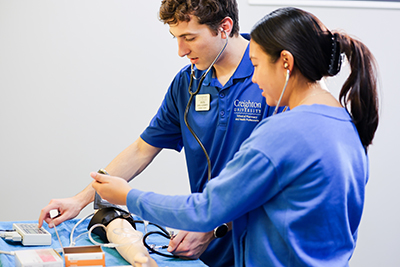
During this experience, third-year students work directly in clinical settings such as outpatient clinics and hospitals. They collaborate with faculty mentors and healthcare teams while applying their knowledge in real patient care environments.
“They’re assigned to ambulatory care, acute care or specialty sites,” Skrabal says. “It’s an opportunity to apply what they’ve learned and begin functioning as part of a patient care team.”
As pharmacists take on more visible roles, leadership development is equally important. Creighton students are encouraged to see themselves as leaders who advocate for patients and contribute to better healthcare outcomes.
“Leadership may involve guiding colleagues, advocating for patients and mentoring others,” says Dr. Stacey Dull. “It’s about using your expertise to make a difference.” A pharmacy degree with diverse career opportunities
Pharmacy is no longer defined by a single career path. Graduates can pursue roles in:
- Clinical pharmacy and hospital care
- Ambulatory care and chronic disease management
- Population health and public health
- Research, innovation and pharmaceutical development
Ann Ryan Haddad, PharmD, professor of pharmacy practice, says adaptability is one of the most important traits future pharmacists can develop. “As job opportunities arise, pharmacists must be willing to pivot and adapt to new roles,” she says. “Your first job likely won’t be your last.” For this reason, Haddad continues, “we introduce professional identity formation early and reinforce it throughout the program. Students learn that their roles go far beyond dispensing medications.”
Through strong faculty mentorship, hands-on learning and a focus on real-world impact, Creighton pharmacy students graduate ready to shape the future of healthcare.


