A University committed to research
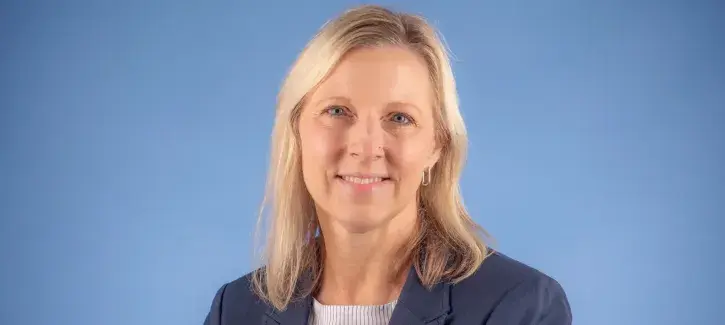
As Creighton continues to expand its research presence, student involvement remains central. As associate vice provost for Research and Scholarship, Juliane Strauss-Soukup, PhD, works across campus to support faculty scholarship and undergraduate and graduate research.
She reflects on Creighton’s philosophy of research, the importance of student involvement and what lies ahead for the University.
What does your role involve?
As the AVP for Research and Scholarship, I oversee Sponsored Programs Administration, Research Compliance and the Center for Undergraduate Research and Scholarship (CURAS). I work with faculty on grant development while ensuring research involving human subjects, animals and chemicals follows federal guidelines. I also collaborate with CURAS to advance undergraduate research events, funding opportunities and conferences, and I support students as they complete and disseminate their scholarly work.
What role does research play in Creighton’s identity?
Research is integral to everything we do as teachers and scholars. Our mission states, “Creighton exists for students and learning,” and faculty conduct research to discover new knowledge and contribute meaningfully to society. Research informs our teaching, and students benefit not only in the classroom but through individual research projects with faculty.
How does research at a Jesuit university differ?
Our researchers take cura personalis to heart and mentor their learners in many ways. A research mentor is not just an “expert in that field” — they are also an academic advisor, a life coach and a colleague. Many faculty approach their work with a lens of equality and justice, studying topics that align with Jesuit values and the betterment of society.
Why is undergraduate research so central at Creighton?
By getting involved in research as undergraduates, students learn outside the classroom, which is a high-impact educational practice. Being able to “do that experiment” you read about in class draws students into the process and becomes a pivotal step in their education.
The act of “doing” solidifies facts, hypotheses and results in a student’s mind. Learning one-on-one with a faculty mentor is very different from being “1 of 40” in a classroom. The experience of being “1 of 1” in mentored research is a powerful differentiator, and the impact of working alongside a faculty mentor is priceless.
Some may not associate Creighton with research. What might surprise them?
We have experts across many disciplines. In the sciences, faculty study hereditary cancers, hearing loss, tick-borne Lyme disease and antibiotic resistance. In the health sciences, researchers examine new dental materials, diabetes health outcomes, rehabilitation programs and the use of AI in healthcare. We also have scholars studying international and cyber law, economic trends, disability history, family and health communication and art and healing.
How is artificial intelligence shaping research and teaching?
Creighton’s Center for Faculty Excellence recently hosted the Teaching, Learning and Assessment Symposium, where I led the “Research from All Angles” event focused on artificial intelligence. Faculty from across campus shared innovative ways they are using AI to educate students, test hypotheses and improve care for individuals.
AI is important to all aspects of what we do as educators, and at Creighton we are committed to teaching students the ethical use of AI in research and in the classroom.
What excites you most about the future of research at Creighton?
Creighton is committed to research, and we will continue to explore “big ideas” while providing opportunities for students to get involved. Since our designation as an R2 institution (a doctoral university with high research activity), we have demonstrated our strengths in the Midwest, and I hope to see that recognition extend nationally.